Best Cenotes in the Riviera Maya: Which Are Worth the Drive
In this guide
There are thousands of cenotes in the Yucatán and only a handful you should plan a day around. The difference is not beauty — nearly all of them are beautiful — it is type, crowds, and cost. This guide explains the three kinds of cenote, names the ones near Tulum and Puerto Morelos that genuinely justify the drive, gives fee ballparks, and covers the two rules that matter: go early, and skip the sunscreen.
Open, semi-open, cave: the taxonomy that actually matters
Cenotes are collapse points in the limestone shelf over the peninsula’s underground rivers. How collapsed determines the experience:
| Type | What it is | Feels like | Best for |
|---|---|---|---|
| Open | Fully collapsed — a round lake or lagoon open to the sky | Swimming hole; sun, jungle rim, jumping platforms | Families, relaxed swim days, lily-pad photos |
| Semi-open | Partial roof — half sunlight, half cavern | The classic light-beam photos; a bit of both worlds | First-timers, photographers |
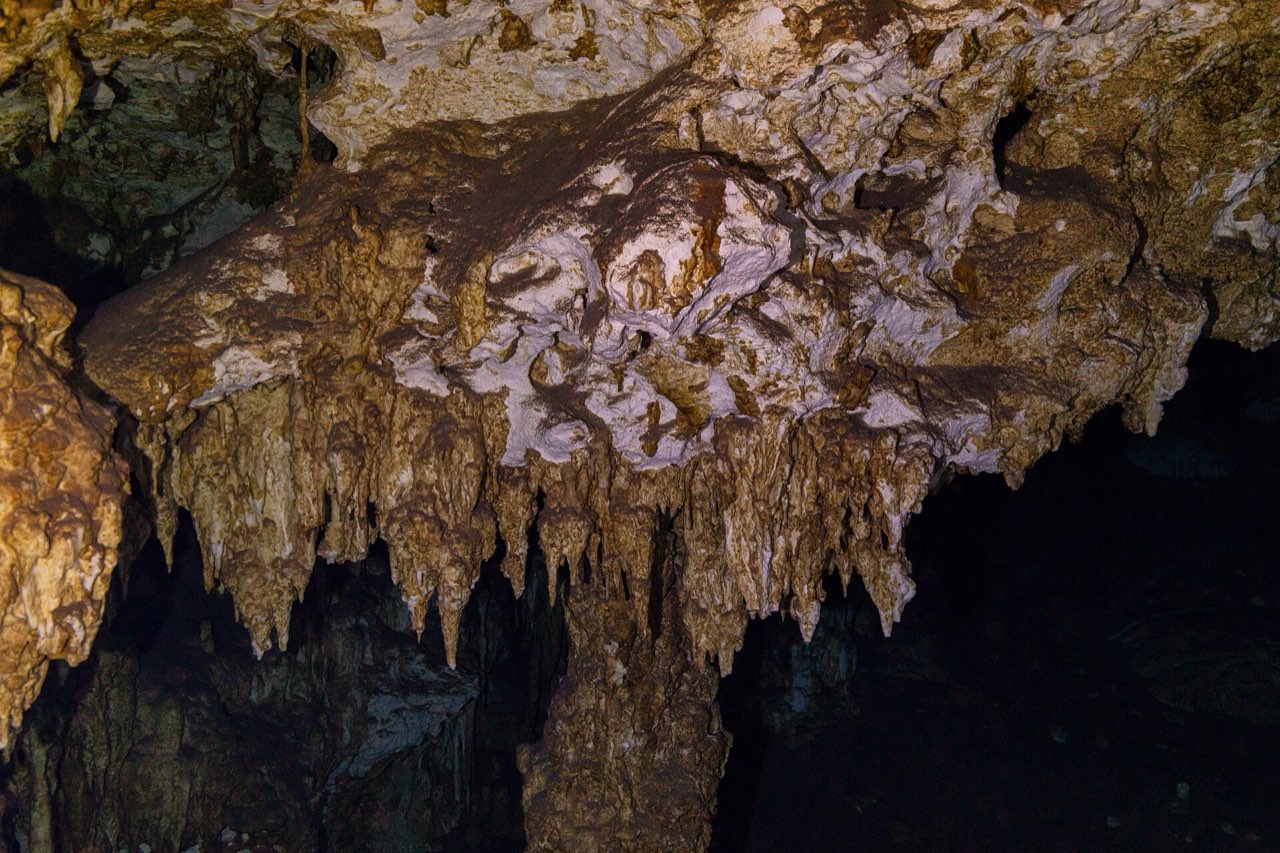
| Cave | Roof intact — you swim into a genuine cavern | Otherworldly; stalactites, blue glow, cool air | Snorkelers, divers, anyone who wants the “wow” |
If you only do one, make it a cave or semi-open cenote — open cenotes are lovely but closer to a very nice swimming hole, while a cavern full of filtered blue light is unlike anything else you will swim in. Water in all of them runs cool (roughly 24–25 °C year-round), stunningly clear, and fresh.
The Tulum cluster
The densest concentration of first-rate cenotes sits within 15 minutes of Tulum, which is a core reason to route your trip through it (see our Tulum guide).
Gran Cenote — the all-rounder (semi-open)
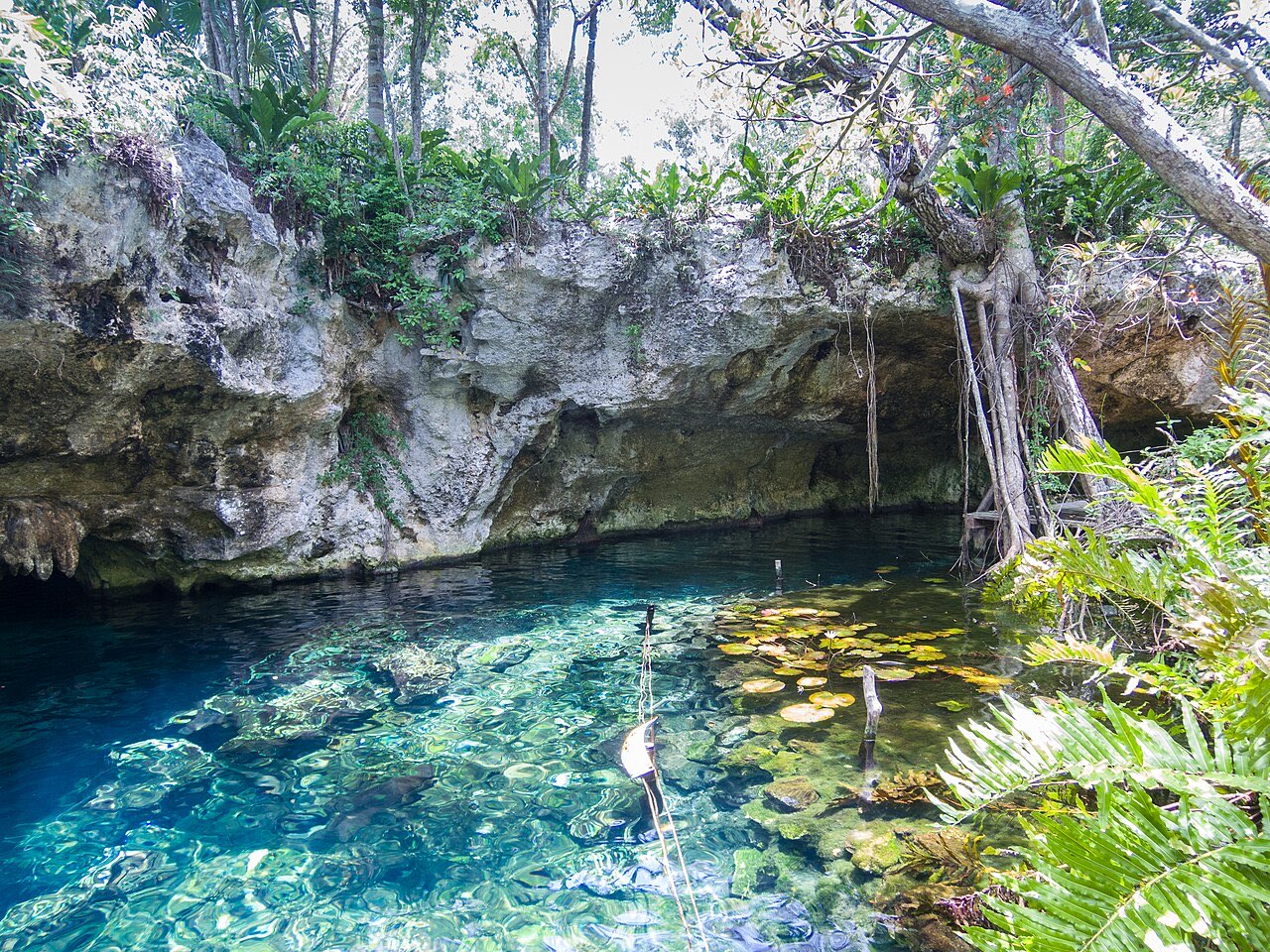
The most famous name near Tulum, and deservedly so: boardwalk decks, white-sand bottoms, freshwater turtles, and a snorkelable cavern arc connecting two open pools, bats included. Entry runs roughly 500 MXN. The catch is popularity — by late morning it is a swimming lesson in crowd dynamics. Be there at opening (typically 8 a.m.) and you get an entirely different, almost private place for your first hour.
Cenote Calavera — the character actor (semi-open, jump-in)
Three holes in the limestone — a “skull” face, hence the name — dropping into one atmospheric chamber. You enter by ladder or, more famously, by jumping through the openings. Small, moody, photogenic, and popular with cave divers staging deeper trips. Entry roughly 250–300 MXN. It is a 45-minute visit, not a half-day — pair it with Gran Cenote, five minutes up the same road.
Dos Ojos — the showpiece (cave)
Two enormous flooded cavern “eyes” connected by passages, part of one of the longest underwater cave systems on Earth. This is the best snorkel-a-cave experience on the coast: hanging gardens of stalactites, shafts of blue light, water so clear the boats seem to levitate. Entry roughly 500–600 MXN for the general area (guided snorkel routes and dives cost more). It sits off the highway between Tulum and Akumal — easily reached by colectivo from either Tulum or Playa del Carmen, which drop you at the highway entrance.
Honorable mentions: Carwash (Aktun Ha) for open-water lily-pad serenity at a lower price; Cenote Cristalino and Jardín del Edén off the highway near Puerto Aventuras for easy, open, jump-friendly swimming, roughly 150–250 MXN each.
The Puerto Morelos cluster: Ruta de los Cenotes
Half an hour south of Cancun, a jungle road runs inland from Puerto Morelos signed as the Ruta de los Cenotes — three-plus dozen cenotes over about 35 km. It is the natural cenote day if you are based in Cancun rather than further south (pairs well with the approach in our Cancun budget guide: colectivo to Puerto Morelos, then taxi up the ruta).
The character here differs from Tulum’s: fewer polished showpieces, more locally run swimming holes, ziplines, and half-adventure-park hybrids. Standouts:
- Cenote La Noria — semi-open with a cavern swim, family-run feel, usually uncrowded. Entry roughly 200–300 MXN.
- Kin Ha — deep open-air cenote plus cavern neighbors, jumping platforms, optional ziplines.
- Verde Lucero — open, jungle-ringed, zipline into the water, popular with locals on weekends.
- Siete Bocas — seven mouths into one dark cavern system; atmospheric and quirky.
Fees on the ruta run roughly 150–400 MXN. Weekdays are dramatically quieter than weekends, when Cancun families quite reasonably show up in force.
The rules: sunscreen, showers, and respect
Cenotes are windows into the aquifer — the same water the region drinks, connected over vast distances. That is why every reputable cenote enforces the same code:
- No conventional sunscreen or insect repellent. Biodegradable-only where allowed, and truly none is better. Wear a rash guard for sun instead. Expect a mandatory rinse shower before entering — take it seriously rather than treating it as theater.
- Don’t touch formations. Stalactites take centuries per centimeter and die from skin oils.
- Life jackets are mandatory at some cenotes (included or a small rental fee); deep open cenotes have no shallow end.
- Cash. Most cenotes take nothing else. Bring small bills.
Timing: how to beat the tour buses
Cenote crowd flow is brutally predictable. Tours from Cancun and cruise ports arrive roughly 10:30 a.m.–3:30 p.m. Outside that window, even Gran Cenote and Dos Ojos can feel personal. Your options:
- Opening hour (8–9 a.m.) — best light beams in cave cenotes come a bit later, but the solitude is unbeatable, and morning water clarity (before hundreds of swim-throughs stir fine silt) is at its peak.
- Last 90 minutes before close — the buses are gone; you trade a little daylight for a lot of calm.
- Weekdays over weekends, especially on the Ruta de los Cenotes.
One more seasonal note in the cenotes’ favor: they are the coast’s great sargassum insurance. When the seaweed season (roughly April–September) hits the beaches hard, a cenote day loses nothing — the water is inland, filtered, and permanently postcard-clear. Build one flexible cenote day into any itinerary, as we do in our 7-day no-car plan, and a bad beach week can’t sink the trip.
What to bring (and what to leave behind)
Pack light and specific: a swimsuit worn under your clothes (changing rooms range from decent to a shed), a quick-dry towel, water shoes for slick limestone steps, a rash guard instead of sunscreen, and a dry bag for phones — the photogenic platforms are exactly where electronics go swimming. A basic snorkel mask transforms the cave cenotes and rents on site for roughly 50–150 MXN if you do not carry your own. GoPro-style cameras are welcome everywhere; drones and tripods usually are not, and a few cenotes charge a separate camera fee of roughly 100–300 MXN, which is worth confirming at the gate before you pay for it accidentally. Leave behind anything scented — lotion, hair product, bug spray — and eat before you arrive, since food options at most cenotes are a lonely snack stand at best.
A suggested short list
- One day near Tulum: Gran Cenote at 8 a.m. → Calavera before lunch → Dos Ojos snorkel in the afternoon lull, or save Dos Ojos for its own early morning.
- One day from Cancun: colectivo to Puerto Morelos → taxi up the Ruta de los Cenotes for La Noria and one open cenote → seafood lunch back in Puerto Morelos town.
- Only one cenote, ever: Dos Ojos, at opening, with a snorkel. That is the one that rearranges people’s mental furniture.
Frequently asked questions
What is a cenote, exactly?
A cenote is a natural sinkhole where the limestone roof over the Yucatán's underground river system has collapsed, exposing fresh groundwater. They range from open lakes to fully roofed caverns, and the water is typically clear, cool, and connected to vast flooded cave networks.
How much do cenotes cost to visit?
Roughly 150–400 MXN for smaller or locally run cenotes, and roughly 500–700 MXN for the famous names like Gran Cenote and Dos Ojos. Bring cash — many take nothing else. Extras like life jackets, lockers, or snorkel rental sometimes cost more.
Why can't I wear sunscreen in a cenote?
Cenotes are closed freshwater systems connected to the aquifer, and sunscreen chemicals — including many labeled reef-safe — accumulate and harm the water and cave life. Most cenotes require you to rinse off at showers before entering and allow biodegradable sunscreen at most; the best practice is none at all, plus a rash guard.
When should I visit a cenote to avoid crowds?
At opening time, typically 8–9 a.m., or in the last 90 minutes before closing. Tour buses and cruise excursions arrive from roughly 10:30 a.m. to mid-afternoon, and popular cenotes feel completely different outside that window.
Keep planning
- Cozumel Day Trip: Ferry Times, Prices, and What to Do
Cozumel day trip from Playa del Carmen: Ultramar ferry times and fares (640 MXN round trip), how to get around the island, snorkeling, beaches, and a day plan.
Updated Oct 2026 - Gran Cenote Near Tulum: Hours, Price, Rules, and Best Time
Gran Cenote near Tulum: about 500 MXN entry, opens around 8 a.m., no sunscreen, camera limits, how to get there, and the best time to beat the tour groups.
Updated Oct 2026 - Isla Mujeres Day Trip from Cancun: Ferry, Golf Carts, Beaches
How to do Isla Mujeres as a day trip from Cancun: Ultramar ferry options, golf cart rental, Playa Norte, and a realistic hour-by-hour plan.
Updated Oct 2026